






Rail Yard Switching in Practice
Where Time Is Lost and Why Operations Are Reaching Their Limits
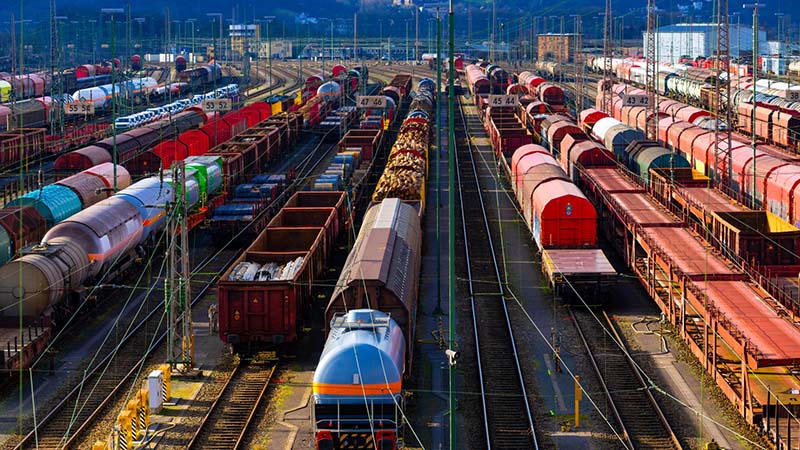 In many industrial facilities with their own rail networks, freight car management follows similar patterns: cars are dispatched, switching orders coordinated, and loading operations carried out, often under tight time pressure and with limited resources.
At the same time, demands are increasing: higher freight volumes, shorter response times, growing cost pressure. Yet the underlying processes often remain unchanged. This article shows where time is lost in daily operations and why existing workflows are reaching their limits.
Stable in Execution, Complex in Coordination
In day-to-day operations, rail yard switching often appears stable. Processes run, cars get switched, orders get fulfilled. But a closer look reveals a different picture: the daily routine requires constant coordination. Information is pulled from multiple sources, and decisions are frequently made through direct back-and-forth between team members. The overall picture of what's happening across the rail network is often pieced together on the fly and isn't always fully available when needed.
The consequences are significant: studies show that switching operations in Europe account for between 10 and 50% of a freight car's total transit time. A single switching move can be responsible for up to 20% of all operational delays.
Common Problems in Yard Operations
Analysis shows that certain patterns repeat across many facilities. They can be grouped into five problem areas:
- Fragmented Information
Car inventories, orders, and status updates are managed in spreadsheets, via email or over the phone. A central data source is missing. - Lack of Visibility
There is no consistent overview of car locations, movements or loading status. The result: constant follow-up calls and last-minute adjustments. - Coordination-Driven Delays
Loading teams wait for cars, switching moves are delayed. The root cause is usually a lack of synchronization and unclear information. - Disconnected Systems
Information is transferred multiple times and maintained manually. This increases both workload and the risk of errors. - High Share of Manual Processes
Documentation, communication and process steps are handled manually and struggle to keep up as complexity grows.
Impact on Operations
These issues don't exist in isolation. They compound each other in daily operations. Typical consequences include slower throughput times, increased coordination overhead, limited ability to respond to changes, and poor planning reliability. A significant share of available resources isn't used productively but is instead tied up in coordination and corrections.
Conclusion
The challenges in rail yard operations are often structural: lack of visibility, fragmented information flows, and a high share of manual processes make efficient management difficult. Operations keep running but with avoidable friction that often only shows up indirectly in day-to-day work.
Many of these challenges can't be solved through isolated fixes. They require a fundamental look at how processes and information flows are organized. In practice, digital approaches are increasingly being used to address this, such as yard management systems that connect dispatching, execution, and documentation in one continuous workflow. Whether and how such solutions make sense depends on the specific conditions at each facility.
Do you see opportunities for optimization in your shunting operations?Talk to our rail logistics expert with no obligation and a practical approach.
